An unknown call may correspond to a hidden number, a number not saved in your contacts, or an unwanted call. To verify the caller’s identity, first use the phone’s functions, a reverse directory, or a specialized app like Truecaller, without confusing identification, blocking, and tracing.
The appropriate reaction mainly depends on what appears on the screen: a visible number can sometimes be searched, while a hidden number does not transmit this information to the app. Before calling back, also check the risk of extra charges, possible number spoofing, and elements that allow reporting abuse.
Unknown call, hidden number, or unwanted call: what is the difference?
Thus, an unknown call simply refers to a call whose identity is not immediately identifiable. The number may be visible but not in your directory, completely hidden by the caller, or displayed even though it has been spoofed by a fraudster. Each situation calls for a different verification.
A visible number can be searched; a hidden number cannot be revealed by magic. An unregistered call appears with its digits, allowing a search in a reverse directory or a reporting database. A private number, on the other hand, generally provides no usable data to the apps installed on the phone.
However, displaying a name does not guarantee the real identity of the person. A bank, an administration, or a relative can be impersonated by phone, while a professional number may be absent from public databases. The digital tool therefore provides a starting clue, not sufficient proof to share a code, validate a transfer, or transmit personal data.
- Unregistered number: the digits are visible, but no corresponding contact is saved.
- Hidden number: the screen usually indicates “private,” “hidden,” or an equivalent phrase.
- Unwanted call: the number may be visible while being associated with telemarketing or reports.
- Spoofed number: the displayed number potentially belongs to another person or organization.
What to do immediately when faced with an unknown call?
But the safest decision is simple: do not immediately call back an unknown call whose number or reason you do not know. Let it ring, check the voicemail, and search the visible number before any prolonged conversation, especially if the call is brief, repeated, or accompanied by an alarming message.
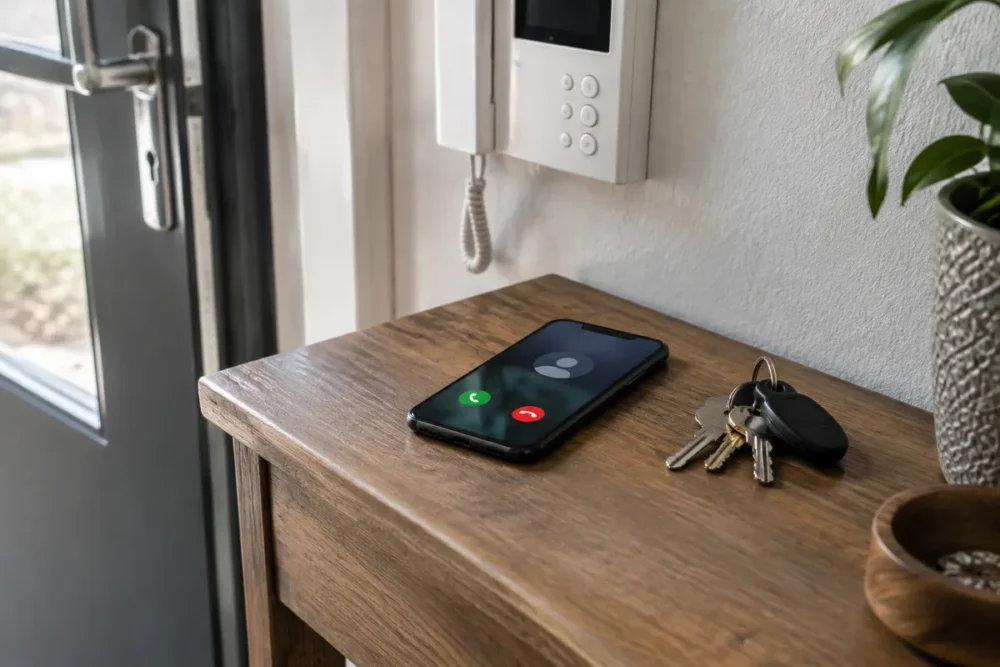
A coherent voicemail message can guide the search. However, it must be cross-checked with an official channel: for a bank, open its app or dial the number on your card; for an administration, use its official website; for a relative, call back a number already saved.
Yet, the name announced by the caller is never enough. An urgent request for a code received by SMS, bank details, or installation of an assistance app is a strong warning sign.
Do not confirm your identity.
You can then search the number in a reverse directory, check associated comments, and consult the history of your exchanges with the alleged organization. If the person claims to represent a bank, hang up and then use only the official number; this disconnection prevents a fraudster from keeping the conversation or pressuring you to act.
How to block or filter unknown calls on iPhone and Android?
However, blocking serves a different purpose than identification: it prevents or reduces future solicitations without revealing the caller’s identity. On iPhone, the function to silence unknown callers is found in the Phone app settings; on Android, the path depends on the manufacturer and the app used.
On iPhone, open the phone-related settings and look for the option to silence calls from unknown numbers. Such calls can be sent to voicemail and remain visible in the call history, allowing you to spot an important call without hearing the ringtone.
On Android, open the Phone app, access its settings, then look for the section dedicated to blocked numbers, caller identification, or spam filtering. The labels differ between Samsung, Google Pixel, Xiaomi, OnePlus, and other manufacturers; a procedure designed for Samsung does not automatically apply to all Android devices.
And if you use a landline, filtering mainly depends on the operator or the provided device, with varying options to block hidden numbers and repeated calls. Check your service manual before activating a general block, as a legitimate call may also not display a number.
| Situation | Useful Action | Expected Result |
|---|---|---|
| Visible and unknown number | Reverse lookup then block if necessary | Possible identification, without guarantee |
| Repeated hidden number | Filter unknown calls | Reduced ringing or call directed to voicemail |
| Call reported as spam | Block and report in the Phone app | Reduction of similar calls |
| Threatening call | Preserve evidence and file an official report | Creation of usable trace |
How to use digital tools to identify a caller?
However, digital tools mainly identify visible numbers already present in a database. A reverse directory can associate a number with a company, a service, or user reports, while an app like Truecaller can display a category or a name provided by its database, with reliability depending on the available data.
Before installing an app, check its permissions, privacy policy, and the possibility to remove your data. An app that requests access to contacts, call history, or certain personal information deserves careful scrutiny, as practical identification comes with a data trade-off.
Truecaller can help recognize a number known to its database. It does not turn a hidden number into a visible one and does not guarantee that the displayed name corresponds to the actual caller. The information may be outdated, incomplete, or associated with a reassigned number.
For a hidden number, the app generally does not receive the digits needed for the search. The telephone codes presented in some foreign publications, notably in the United States, should not be automatically applied in France: their operation depends on the country and the operator.
A call forwarding method also does not systematically reveal the identity. It can change the call’s route without retrieving information that the operator has not transmitted to the recipient.
To deepen the evaluation of an identification service, you can consult this analysis dedicated to Truecaller’s ability to identify suspicious calls, then compare its indications with the official number of the concerned organization.
What to do in case of telemarketing, scams, or phone harassment?
And when a caller presents themselves as a bank, an administration, or a relative, verify their identity through another channel before acting. Hang up, find the official contact yourself, and call back separately; this operation avoids following the instructions of a person who controls the conversation.
An unknown call is not necessarily fraudulent. A professional may call from a hidden line, a hospital service may use an unregistered number, and a private individual may have activated a display restriction; the content of the exchange matters as much as the presented number.
However, several signals should lead to ending the conversation:
- a request for a code received by SMS or validation in a banking application;
- pressure to act immediately or keep the call secret;
- a request for payment, a bank card, or the installation of a remote tool;
- a threat, abnormal insistence, or repeated calls after opposition.
In France, 33 700 is indicated by Service-Public to report voice spam or unwanted SMS. Keep the displayed number, dates, times, voicemail messages, and screenshots before blocking, especially if the calls become threatening.
Telephone canvassing is regulated by rules on hours, frequency, and opposition, with stricter restrictions in 2026; the consumer can request the cessation of communications. To know the rule applicable to your situation, check the updated Service-Public page rather than relying on an old publication.
Premium-rate calls and international calls: why avoid automatic callback?
Finally, the financial risk justifies not mechanically calling back an unknown number, especially when it starts with a prefix associated with special services or when it comes from abroad. A reverse directory can indicate the service and price before the call, provided its information is recent enough.
A premium-rate number can combine the normal communication price and a surcharge charged by the service provider. Depending on the type of number, this surcharge can reach €0.80, a value to verify with the tariff source or the directory used before any callback.
Ten-digit numbers starting with 081, 082, or 089 require particular vigilance, without their prefix alone being enough to establish fraud. A legitimate service can be paid; the right decision is to know the rate, the reason for the call, and the identity of the provider.
But a missed international call does not constitute proof of a scam. Callback is still discouraged when you are not expecting any contact from abroad and no specific message explains the reason for the call.
Key takeaways
- A visible number can be searched; a hidden number cannot be automatically unmasked by Truecaller.
- Let an unknown call go to voicemail before calling back.
- For a bank, an administration, or a close contact, always use an official channel already known.
- Block or filter the call after keeping useful elements.
- Report voice spam or SMS to 33 700 in France.
- Check the rate before calling back a special or international number.