| Key Points | Details to Remember |
|---|---|
| 🔍 Current Definition | Machine learning in 2025 relies on systems capable of self-optimization and continuous learning without constant human intervention |
| 🚀 Major Developments | Multimodal models combining text, image, and sound + federated learning as an industry standard |
| 🌐 Infrastructure | Dominance of neuromorphic architectures and hybrid quantum computing for model training |
| ⚙️ Deployment | Massive edge computing with lightweight self-compiled models for IoT devices |
| 📊 Data | Synthetic generation of datasets via advanced GANs + dynamic bias filtering |
| 🧠 Adaptive Intelligence | Meta-learning mechanisms enabling real-time contextual adjustment |
The machine learning landscape has undergone a silent but radical transformation since the beginning of the decade. What once looked like a collection of static algorithms has become a living ecosystem, capable of organic evolution. The breakthrough lies less in technical feats than in a change of philosophy: intelligence is no longer programmed, but environments where it emerges are cultivated. The horticultural analogy is no coincidence – today’s data scientists see themselves more as gardeners of information than as engineers.
The New Algorithmic Foundations
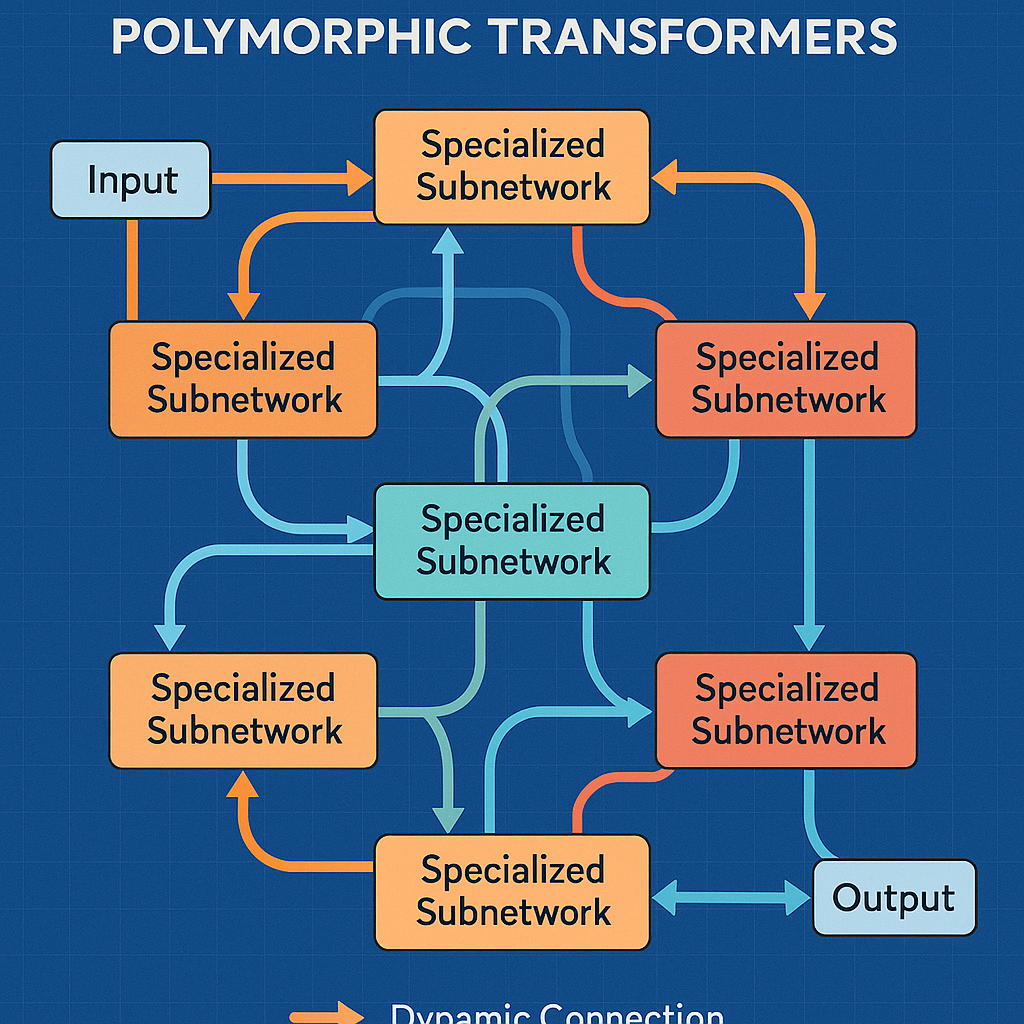
Deep learning architectures have reached a qualitative leap with the advent of polymorphic transformers. Unlike the monolithic models of the 2020s, these systems dynamically orchestrate specialized subnetworks according to context. Imagine an orchestra where each musician masters several instruments and adapts their score based on the venue’s acoustics – that is the flexibility these modular structures offer.
Contextual Self-Supervised Learning
Massive pre-training on generalist corpora has given way to mechanisms of contextual self-correlation. Rather than ingesting petabytes of raw data, contemporary models identify gaps in their knowledge themselves and generate targeted queries to fill them. A recent MIT study (2024) shows that this approach reduces external data needs by 80% for specialized tasks like medical diagnosis.
The Role of Regulatory Meta-Networks
These neural controllers continuously monitor execution biases and conceptual drifts. When your voice assistant suddenly adjusts its language level to your detected mood, that’s the work of these intelligent safeguards. They operate like a cognitive immune system, isolating fallacious reasoning before it contaminates decision-making.
Infrastructure: The Invisible Hardware Revolution
Without fanfare, the hardware ecosystem has undergone profound transformations. Fourth-generation TPU (Tensor Processing Units) now integrate modules dedicated to private differential computation, allowing sensitive data to be processed without ever decrypting it. Homomorphic encryption is no longer an academic curiosity but a standard component of neuromorphic chips.
The Advent of Practical Quantum Computing
Contrary to optimistic predictions, the universal quantum computer remains out of reach. But hybrid quantum-classical processors have found their niche in hyperparameter optimization. Companies like QuML Tech offer cloud services where your classical model delegates complex latent space calculations to quantum co-processors, thus reducing training time from days to hours for certain architectures.
Mature Edge Computing
Energy constraints have driven innovation. The latest smartphones feature ML accelerators capable of running models with 500 million parameters consuming less than 3 watts. The secret? Adaptive compilation techniques like sparse computing that dynamically disable up to 70% of neurons without loss of accuracy on specific tasks.
The Model Lifecycle in 2025
The concept of a “trained model” belongs to the past. Welcome perpetual learning systems powered by dynamic data streams. This paradigm shift comes with unprecedented challenges in traceability.
Continuous Validation
Traditional testing phases are replaced by real-time feedback loops. In critical applications like autonomous driving, every decision is evaluated by a digital twin simulating thousands of parallel scenarios. If a bias emerges, it is corrected before the next iteration—a process engineers call “adaptive immunity.”
“We no longer certify fixed models, but learning processes” – Dr. Lena Kovac, President of the Alliance for Ethical AI
Governance by Cognitive Blockchain
Every change to a model’s weights is recorded in distributed ledgers, creating a verifiable genealogy tree. This traceability has become crucial since the European AI-2024 regulation which mandates retrospective explainability of automated decisions. In practice, this allows tracing the origin of aberrant behavior as one would follow a DNA trail.
Transformative Applications
The real revolution does not lie in research labs but in industrial mainstreaming. Three sectors embody this transformation:
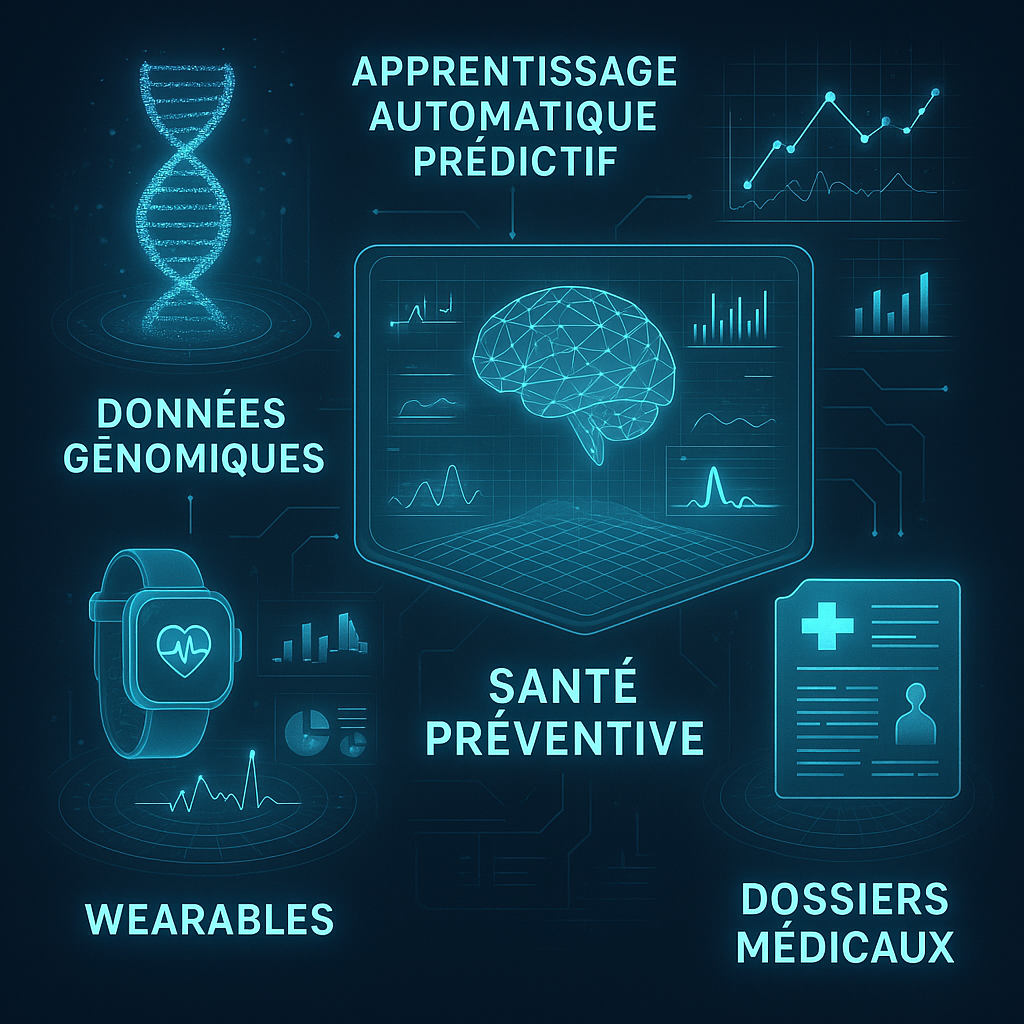
- Preemptive Healthcare: Algorithms now cross-reference genomic data with lifestyle habits captured by wearables to predict pathologies 5 years before clinical onset. The Mayo Clinic reports a 40% reduction in emergency hospitalizations thanks to these systems.
- Cognitive Agriculture: Drones equipped with hyperspectral sensors analyze the micronutritional status of crops, while predictive models optimize irrigation and treatments at the scale of each plant.
- Regenerative Industry: “Zero-waste” factories use ML to maximize material recycling in real time. Companies like CircularTech achieve reuse rates of 99.2% on their production lines.
Ongoing Challenges
Despite progress, some problems persist. Algorithmic fairness remains an open issue—filtering statistical biases is easy, but correcting systemic distortions requires a redesign of annotation processes. Initiatives like DAIR (Distributed AI Research) are working on decentralized labeling protocols where each contributor validates others’ annotations via consensus mechanisms.
Energy sobriety
Training a mega-module always consumes the energy equivalent of a small town. Will the solution come from room-temperature superconducting materials? Or from radically more efficient algorithms like MIT’s Liquid Neural Network, whose dynamic connections reduce consumption by 95%? The race is on.
Cognitive security
Adversarial perturbation attacks have become more sophisticated. Researchers at Stanford have demonstrated that it is possible to “hypnotize” a computer vision model with specific light patterns, temporarily rendering it blind to certain objects. The countermeasure consists of behavioral anomaly detection layers integrated directly into neural networks.
FAQ: Machine learning in 2025
What is the main difference with ML from the 2020s?
The end of the “train then deploy” paradigm. Current models learn continuously from operational data, with strict self-monitoring mechanisms.
Can small businesses use these technologies?
Absolutely. Platforms like ML-As-A-Service 2.0 offer cutting-edge capabilities via modular subscriptions, eliminating the need for heavy infrastructure.
Is explainability guaranteed?
Not systematically, but XAI (Explainable AI) tools now generate reports understandable by non-experts, thus meeting regulatory requirements.
Has quantum lived up to its promises?
Partially. It excels in combinatorial optimization but remains marginal for perception tasks like computer vision. Its adoption is gradual.
What skill is most sought after?
Prompt engineering for multimodal models, combining technical mastery and semantic creativity – a profession that did not exist three years ago.