Analysis of the Brawl Stars Tier List: Understanding the Meta to Choose the Right Brawler
A Brawl Stars tier list analysis that is useful does not rank characters from strongest to weakest like sorting random cards. It reads the Brawl Stars meta, separates the modes, identifies maps that skew the results, and avoids the classic trap: confusing popularity, comfort of play, and true effectiveness.
The right approach is not to recite a list. It is to understand why some strong brawlers remain consistent, why others rise after a patch, and why a monstrous pick in Brawl Ball can become average in Knockout. The hierarchy moves quickly, but not randomly.
This reading serves a very concrete purpose: choosing the right brawler at the right time, depending on the mode, the map, and the skill level. The ranking then becomes a decision-making tool, not a forum totem.
In Brief
🧠 The tier list only has value if it takes into account the mode and the map.
🎯 The criteria that really matter are range, burst, control, and mobility.
⚙️ Gadgets, star powers, and supercharges sometimes swing a matchup.
📊 The data from Brawl Time Ninja is based on more than 112 million battles and an announced margin of error of 0.08%.
How to Read a Brawl Stars Tier List Without Mistakes?
Start by distinguishing the overall meta, the game mode, and the map. A serious tier list tells you which brawler retains value everywhere, which one explodes on a specific map, and which depends on a duo or a matchup. Without this separation, you read a ranking; you do not understand a gaming environment.
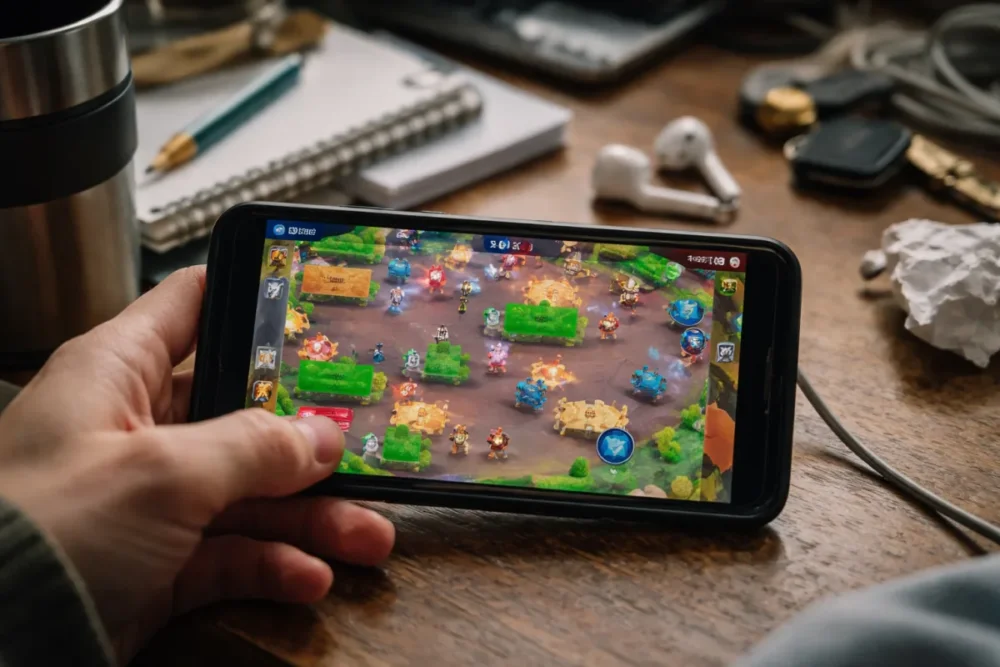
The reflex to avoid is believing that a good win rate explains everything. In practice, a brawler can be excellent because they control an open lane, punish isolated targets, or secure an objective faster than others. The real question is not “who is the strongest?”, but “under what conditions does this strength exist?”.
The Criteria That Really Matter
- Range: it decides who holds the lane and who suffers pressure from a distance.
- Burst: it allows eliminating a target before they can respond.
- Zone control: it blocks a passage, delays a push, or secures an objective.
- Mobility: it turns a good angle into a concrete advantage, then into a clean exit.
- Sustain: it prevents losing the space gained after the first exchange.
Popularity makes noise. The meta scores points.
The learning curve counts as much as the technical sheet. A demanding brawler can be overrated by players who see it work for others, then underused as soon as you really have to read the map. Conversely, a simple-to-handle profile often retains solid value in ladder because it better forgives tempo mistakes.
A serious ranking should not mix maps in the same pot. A brawler who excels on a closed, corridor map does not perform the same on an open map, even if the tier list places them high. The difference between theory and practice is read there: theory gives the ceiling, the map decides the floor.
Why Can an S-Tier Brawler Be Average Depending on the Mode?
An S-tier brawler is not strong everywhere; they are strong where their tools fit the tempo of the mode. If the map opens the lanes, if the objective requires zone control, or if the opposing team can isolate them, their value quickly drops. In Brawl Stars, brute strength counts less than the ability to impose the rhythm of the match.
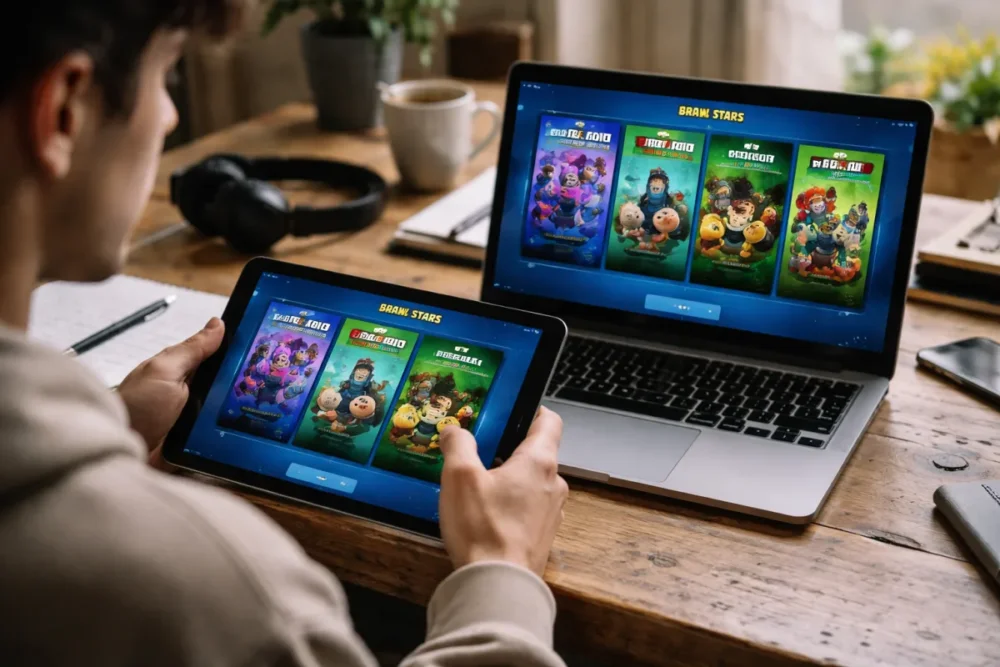
The best example is the contrast between an attrition mode and a pure elimination mode. In one, endurance and control take precedence; in the other, the angle of attack and burst damage weigh more than mere presence. A brawler can therefore dominate the general meta while losing value as soon as the victory condition changes.
| Mode | What matters most | Profiles often favored | Common mistake |
|---|---|---|---|
| Brawl Ball | Mobility, engage, lane pressure | Tanks, assassins, initiators | Choosing too much slow poke |
| Gem Grab | Tempo, control, ability to hold space | Controllers, supports, regular poke | Playing like in deathmatch |
| Knockout | Burst, range, safe positioning | Snipers, controllers, long-range picks | Exposing oneself for an unnecessary duel |
| Showdown | Survival, autonomy, exchange exit | Assassins, lane breakers, duelists | Overestimating the value of support |
A good ranking by mode also avoids another convenient lie: “this brawler is strong so just play them everywhere.” No. The right pick depends on how the map forces exchanges. A compact map amplifies control; an open map rewards range and positioning; a fast objective mode favors clean execution over attrition.
An S-tier is not a license to win; it’s a contextual advantage.
The brawlers who really dominate the current meta
On Brawl Time Ninja (brawltime.ninja/tier-list/brawler), the most recent hierarchy places Damian at the top with an adjusted win rate of 73.2%, ahead of Trunk at 72.4% and Gigi at 72.2%. The site reports a base of over 112 million battles and a margin of error of 0.08%: it’s not a crystal ball, but it’s more solid than a well-felt lobby sentiment.
- Damian — 73.2% adjusted win rate.
- Trunk — 72.4% adjusted win rate.
- Gigi — 72.2% adjusted win rate.
The useful reading doesn’t stop at this podium. The tier list from Dexerto (dexerto.fr/jeux-video/brawl-stars-meilleurs-brawlers-tier-list-1546723/) places Bibi, Bull, Mortis, Crow, and Leon in S-tier. In A-tier, we find Najia, Spike, Colt, Bea, Shelly, and Fang. The message is clear: the best brawlers do not form a single caste; they occupy very high niches in the hierarchy.
- Tier S: Bibi, Bull, Mortis, Crow, Leon.
- Tier A: Najia, Spike, Colt, Bea, Shelly, Fang.
- Tier C: profiles more dependent on context like Meg, Tara, Nani, Kit, or Rosa.
- Tier D: choices harder to capitalize on like Lou, Darryl, Janet, or Meeple.
This breakdown shows an important thing: a ranking is not just a snapshot of the moment, it’s also a test of resilience. Brawlers who remain at the top despite patches are generally those who combine pressure, safety, and flexibility. Others rise when a map favors them, then fall back as the meta closes in.
What the latest balance changes reveal about the brawlers hierarchy
Comparisons between sources say more than update announcements. In April 2024, eSportConnect (esportconnect.com/news/tier-list-brawl-stars-quels-sont-les-meilleurs-brawlers?rs=) ranked Fang, Doug, Maisie, Hank, Buster, Nita, Bonnie, Squeak, R-T, Pearl, Leon, Jacky, and Larry & Lawrie in tier S+. In tier S, there were notably Bibi, Crow, Jessie, Sandy, Otis, Shelly, or Melodie.

The contrast with Dexerto in April 2026 is revealing: Mortis moves into tier S, while Fang drops to tier A. Shelly remains solid but no longer dominates at the same level. In other words, a brawler does not necessarily “become” better or worse in itself; it can mainly fit better or worse into the game structure, the available maps, and the most played counter-picks.
Here is what to remember from these movements:
- The winners are often those who capitalize on an easier-to-exploit attack window.
- The relative losers are mainly brawlers whose power depends on a rarer angle or setup.
- The stable values keep a clear, useful kit that is hard to neutralize over time.
The visible nerf or buff therefore does not explain everything. The real shift sometimes comes from a more insidious detail: the multiplication of responses on the other side, a gadget that closes a kill window, or a supercharge that makes a duel shorter than before. The meta doesn’t only reward power; it rewards consistency.
The real question is not who is strong, but who remains strong when the opponent plays correctly.
How to use the tier list to progress faster?
A tier list becomes really useful when it influences your starting choice, not just your discussions after defeat. If you play solo, you benefit from favoring regular, autonomous brawlers who are less sensitive to coordination errors. If you play in a team, the reading changes: the right pick is often the one that complements the composition, not the one that shines alone.
If you mainly play ladder
In ladder, consistency often matters more than an impressive theoretical ceiling. A brawler easy to capitalize on, capable of surviving a bad start and regaining space, yields better results than a pick that looks brilliant on paper but is too mechanically demanding. The right logic is to reduce risk, not to seek systematic exploits.
If you play in a team
In a team, the meta reading changes in nature. You can aim for sharper synergies, prepared counter-picks, and brawlers who control the map for another offensive role. In this context, the tier list by mode becomes a composition tool, almost a miniature draft grid.
- First check the mode and the shape of the map.
- Then look at the most likely matchups.
- Evaluate your level of mastery on the brawler.
- Take into account the gadget, the star power, and the supercharge.
- Finally, choose the pick that reduces the most real risks.
This simple filter avoids the biggest mistake of rushed players: copying the ranking without understanding what it says. A good brawler is not the one everyone mentions. It’s the one that gives you the best chance to win in the exact context where you will play.
Should you follow the tier list or play your favorite brawlers?
The most profitable choice is often a brawler you master, but not just any. If your favorite pick is consistently punished by the map or mode, mastery doesn’t compensate for everything. The good rule is simple: prefer a solid main, except when the meta clearly neutralizes it.
In short, the tier list doesn’t crush individual skill; it frames it. An average player on an S-tier can lose to a very skilled player on an A-tier, especially in ladder. But as the level rises, kit differences become decisive again. Personal preference matters, as long as it’s not used as an excuse for an objectively weak choice.
Key takeaways
- 🔥 The Brawl Stars tier list becomes useful only if read by mode and by map.
- 🎯 Range, burst, control, and mobility weigh more than popularity.
- ⚙️ Gadgets, star powers, and supers sometimes shift the hierarchy faster than a patch.
- 📈 Mass data provides a better reading than impressions from isolated matches.
- 🧭 The best pick remains the one that maximizes the context, not the one that flatters the ego.
FAQ
Who is the best brawler right now?
The most recent data from Brawl Time Ninja places Damian ahead of Trunk and Gigi in May 2026, with very high adjusted win rates. But this podium only makes sense for all the modes and maps tracked by the source. In practice, the best brawler always depends on the exact context.
Why can a very strong brawler in Brawl Ball be bad in Knockout?
Because the two modes don’t require the same things. Brawl Ball values engagement, pressure, and the ability to gain space, while Knockout rewards range, burst, and safe positioning. A kit can therefore excel in the first and fade in the second.
Should you trust win rates to choose a brawler?
Yes, but never alone. A high win rate can reflect true power, excellent synergy, or simply a pool of very skilled players. It must always be cross-referenced with the mode, the map, and the brawler’s ease of execution. Otherwise, you confuse useful statistics with incomplete interpretation.
Does the tier list change with every update?
Not always dramatically, but almost always visibly. A buff, a nerf, or a change in the game environment can raise a brawler, weaken another, or move a pick from the top of the table to a more situational spot. The meta often shifts in small waves, not tsunamis.