Why this “trackr.fr tech” dossier?
The query trackr.fr tech reflects a search for technical information: here, one is looking for answers about the operation, integration, and use of trackers, not just a product sheet. The article from Com-strategie.fr documents the use cases very well and shows illustrative examples; this dossier takes these elements and adds a technical layer aimed at engineers and architects.
1. Technological overview: BLE, GPS, UWB
Consumer trackers rely on several complementary technologies:
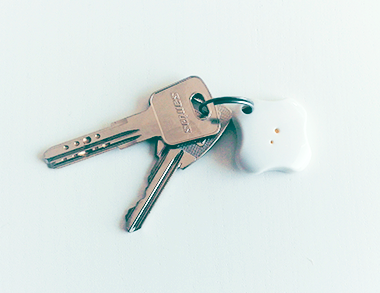
- Bluetooth Low Energy (BLE): ideal for local detection — low power consumption, practical range 30–100 m depending on the environment; used for key and everyday object trackers.
- GPS + cellular: for long-distance tracking (bike, suitcase). Requires network connectivity (SIM/eSIM) and usually a data subscription; higher energy consumption.
- Ultra Wideband (UWB): centimeter-level precision technology (Apple Nearby Interaction / U1 deployments). UWB is the next frontier for indoor user experience (visual guidance, directional indication).
2. The community network: principle, strengths and limits
The strength of modern solutions comes from the community network: when a tag is out of range of its owner, other phones with the app can anonymously detect the BLE signal and report its position to the central service, greatly improving coverage without dedicated infrastructure.
3. Mobile application: roles, constraints and patterns
The mobile app fulfills several functions: user interface (map, history, sharing), community relay (background BLE scanning), and collection agent for server-side reporting. It must manage sensitive permissions (location, Bluetooth) and optimize consumption (batching, geofencing). 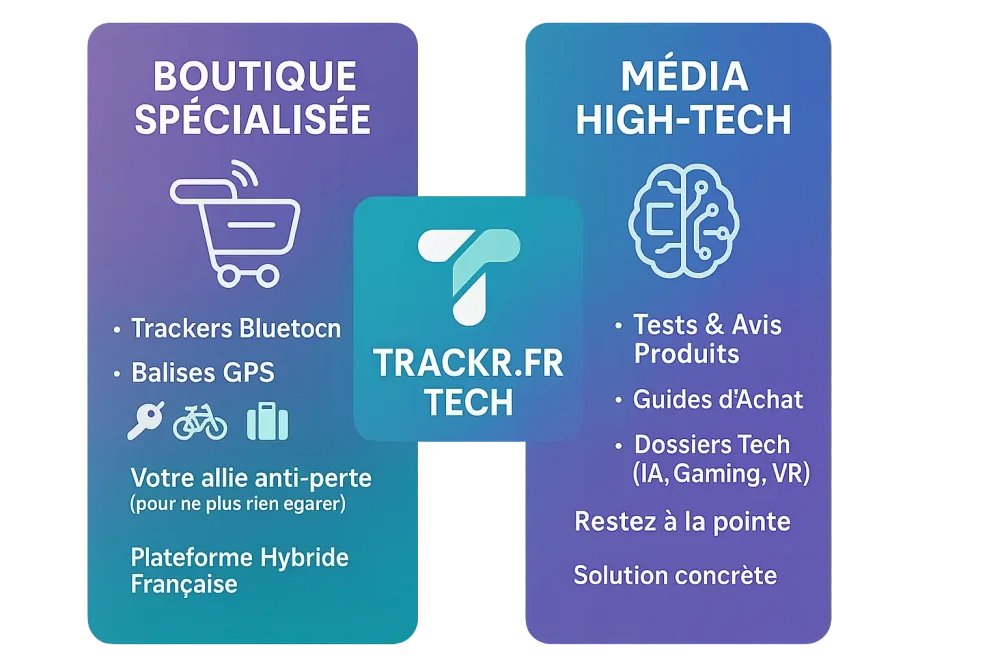
4. Recommended back-end architecture
A robust architecture typically consists of:
- Edge / CDN for the SDK and static assets.
- Stateless Collector API (HTTPS) that receives hits and responds quickly (204).
- Ingestion queue (Kafka / Redis Streams) to decouple ingestion and processing.
- Asynchronous workers that validate, enrich, and push to analytical storage.
- Time series storage (ClickHouse) and RAW backups on S3.
- API / Dashboard for visualization, exports, and webhooks.
5. Technical example: client snippet + PHP collector
/* SDK minimal (trackr.fr tech) */
(function(w){
  var t = w.trackr = w.trackr || function(){ (t.q = t.q||[]).push(arguments); };
  var s = document.createElement('script'); s.async = true; s.src = 'https://cdn.trackr.fr/sdk/trackr.min.js';
  s.crossOrigin = 'anonymous';
  document.head.appendChild(s);
  trackr('event','pageview',{url:location.href,ts:Date.now()});
})(window);
6. Performance and reliability
Main risks: blocking JS, payload too large, losses when closing the app. Countermeasures:
- Serve the SDK via CDN (long cache).
- Use Beacon API / fetch keepalive for exit hits.
- Client-side batching with periodic flush and localStorage backup.
- Adaptive sampling in case of massive volumes.
7. Security: encryption, signing and hardening
- TLS everywhere (HTTPS) and HSTS.
- Encryption of sensitive data at rest (AES-256) and in transit (TLS).
- HMAC signing of payloads for third-party integrations and key rotation.
- Rate limiting, WAF and anomaly monitoring.
8. GDPR and compliance (France)
Geolocation collection is sensitive processing: clear information, prior consent, data minimization, justified retention period, and means to exercise rights (deletion, portability).
Set up a processing register and, if necessary, a DPIA.
9. Field comparison and positioning
Facing AirTag, Tile or Chipolo, the “store + media” strategy aims at education and support. The giants (Apple) bet on the ecosystem and UWB, while independent players focus on multi-platform compatibility and subscriptions.
10. Perspectives: Predictive AI, UWB and home automation
- Predictive AI to anticipate forgetfulness and detect behavioral anomalies.
- UWB for indoor accuracy and industrial uses.
- Home automation integration to automate proximity scenarios.
11. Use cases and advanced integration scenarios
- Light fleet management — GPS trackers on shared bikes and centralized reporting.
- Home automation — actions triggered by proximity.
- Retail — locating shelves or assets in warehouses with UWB.
12. Technical FAQ (excerpt)
Should BLE or GPS be preferred?
BLE for nearby objects; GPS for long-distance moving objects; UWB if indoor accuracy is critical.