Discover the complete history of the Amstrad CPC (464, 664, 6128, Plus, GX4000): dates, sales, technology, software, market in France, and legacy, with sources and FAQ.
The History of the Amstrad CPC: From British 8-bits to the French Icon
Between 1984 and 1990, Amstrad shook up the European home microcomputer market with an all-in-one range integrating keyboard, drive, and monitor. From the CPC 464 to the Plus models, up to the GX4000 console, here is the complete story of a lineage that marked France, Spain, the United Kingdom, and Germany.
TL;DR:The CPC (1984) was a hit thanks to the bundle with monitor and Locomotive BASIC.The 664/6128 introduced the 3″ drive and CP/M, then the Plus range (1990) added sprites/DMA.The GX4000 console failed, but the scene and expansions maintained the legacy.
Origins and Strategic Breakthrough (1983-1984)
In the early 1980s, Amstrad thrived in consumer electronics. Alan Sugar wanted to exit a market as soon as it became crowded and undifferentiated; he identified the home computer as a new growth driver. Rather than copying dominant formulas (micro + TV + separate tape recorder), the team led notably by Roland Perry imagined a reassuring “all-in-one”: keyboard unit with integrated drive, sold mandatory with a monitor serving as power supply. This choice eliminated RF/antenna uncertainties, standardized the experience, and simplified after-sales service.
The CPC 464 was released in 1984 with 64 KB of RAM and an integrated cassette drive. The bundled price with monitor appealed to households and schools; the machine appeared “serious” thanks to the full keyboard and a powerful BASIC. The marketing strategy reduced entry frictions: a single box, a proprietary direct video cable, a didactic manual, and at first power-on, a BASIC prompt ready to run programs and launch games.
This technical and pricing positioning, coupled with aggressive distribution, allowed the CPC to compete with the C64 and ZX Spectrum on their turf, while offering, via CP/M on disk versions, a gateway to light office uses. Over the decade, the range would reach about 3 million units sold in total, with the 464 credited with more than 2 million units in Europe according to museum and encyclopedic sources.
The “Classic” Range: 464, 664, 6128
CPC 464 (1984): 64 KB, integrated cassette drive, green or color monitor. It served as a playful and educational entry point. Its ergonomic keyboard, overall reliability, and turnkey price made it a European bestseller. Success also relied on the quick availability of accessories (printers, joysticks) and a growing game catalog via the internal publisher Amsoft then third-party publishers.
CPC 664 (April 1985): 64 KB but with an internal 3-inch floppy drive. Marketed for about six months, it proved the demand for floppy disks but quickly gave way to the 6128, better equipped and slightly more expensive. The 664 is now sought after for its relative rarity.
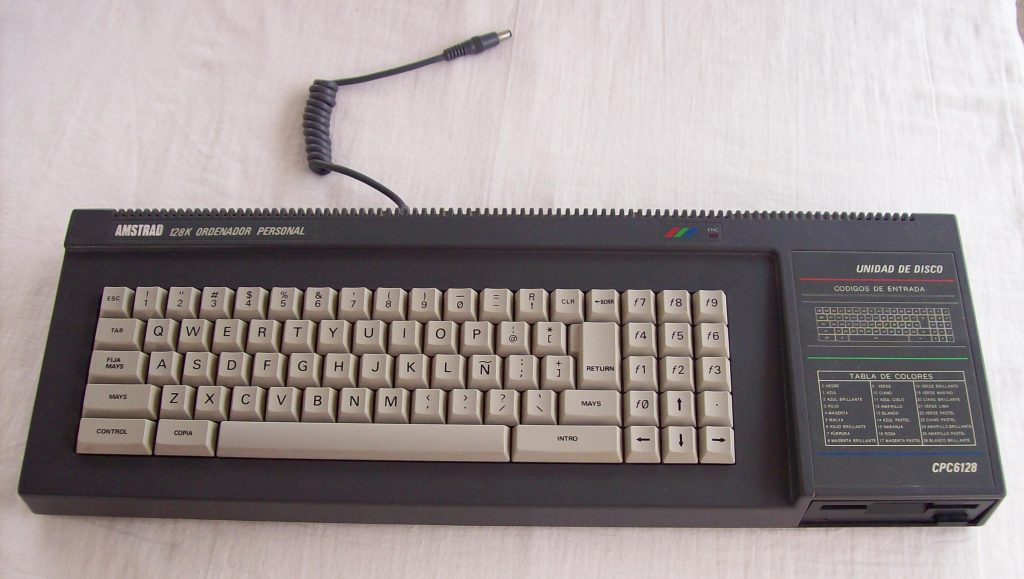
CPC 6128 (Summer 1985): 128 KB of RAM, internal 3″ drive, and CP/M Plus compatibility. It is the most versatile model for CP/M office use and assembler development. Introductory prices, positioned below PC compatibles, allowed the 6128 to attract freelancers and high schools. In practice, the 128 KB improved games and utilities thanks to bank switching, even though the Z80 directly addresses only 64 KB.
Software and Systems: Locomotive BASIC, AMSDOS, and CP/M
The CPC includes in ROM Locomotive BASIC, renowned for its richness: graphic commands (MODE, INK, DRAW, FILL…), text window management, and especially timed events (AFTER, EVERY) useful for animation and games. This approach allows quick exploitation of video and the AY-3-8912 without systematically resorting to POKE. The learning curve is short: the manual shows concrete examples and the dedicated monitor standardizes the display.
On the storage side, AMSDOS manages cassettes and 3″ floppy disks. It coexists with CP/M 2.2 on 64 KB floppy disk systems (664, 464 + DDI-1) and CP/M Plus (3.1) on the 6128, opening access to a “professional” ecosystem of word processors, spreadsheets, assemblers, BBS, and utilities. Moving to the 6128 allows running more ambitious software thanks to memory banks, even though the OS and BASIC remain very responsive on 64 KB.
The result: a machine both playful and productive, with games loading in AMSDOS on cassettes/floppy disks and CP/M applications on “system” floppy disks. This duality extended the lifespan of the range, serving as much for learning as for working.
Video, sound, and architecture: what the CPC could do
The video combines a 6845-type CRTC and a proprietary gate array. Three native modes are offered: Mode 0 160×200 in 16 colors, Mode 1 320×200 in 4 colors, Mode 2 640×200 in 2 colors. The palette of the “classic” CPCs includes 27 colors derived from a three-level RGB (0, 50%, 100%). Raster and interrupt tricks allow increasing the visible colors by slices for demos and certain games.
Sound is provided by the General Instrument AY-3-8912: three tone/noise channels, hardware envelopes, speaker output and headphone jack. Rudimentary sample playback techniques exist, at the cost of a significant CPU load. On the CPU side, all CPCs use a Zilog Z80A at 4 MHz, but memory arbitration with video results in a slightly lower “effective” speed. The architecture remains simple and robust, suitable for Z80 assembly and extensions (memory, controllers, serial interfaces).
Finally, the choice of an RGB DIN connector and a dedicated monitor ensures a sharp image at 50 Hz, while other micros still used antenna output. This “packaged” coherence was a decisive factor in perceived success.
The bet on the 3-inch disk: CF2 format
Amstrad opted for the 3″ CF2 (Matsushita/Hitachi), a rigid format with an internal metal slider, more expensive but presented as more reliable and robust than 3.5″. The built-in drives of the 664/6128 are single-sided 40 tracks; the user flips the disk to access the other side, each with its own write-protect notch. In typical AMSDOS Data, one side offers about 178-180 KiB usable; the total per disk reaches ~360 KiB. The NEC 765 FDC controller is shared with PCs of the time, which facilitated later transfer tools.
While this choice secured the experience and Amstrad’s margins, it also locked users into a more expensive and less universal consumable than the 3.5″. In the long term, the scarcity of 3″ floppy disks encouraged modern solutions: drive emulators (HxC, Gotek), SD controllers (M4 Board), or adapters to 3.5″ drives.
Markets and distribution: France, Spain, Germany (Schneider)
The CPC established a strong presence in the United Kingdom and France, where the 464 exceeds one million units according to French-speaking sources. In Germany and Austria, Amstrad relies on Schneider, which markets CPCs under its brand (CPC 464/6128), strictly compatible. This OEM strategy accelerates access to local networks and reassures resellers.
In Spain, a particular model appears: the CPC 472, a 464 equipped with 8 KB of “ghost” memory to circumvent a tax on microcomputers of 64 KB and less at import. This episode illustrates Amstrad’s commercial agility in the face of occasional customs barriers. More broadly, the “bundle” pricing policy and availability in large retail stores favored family adoption, while CP/M conquered professional/educational niches.
In total, the CPC series reaches about 3 million units, with the 464 estimated at more than 2 million in Europe. France becomes a stronghold with dedicated press (Amstrad Cent Pour Cent, Amstar) and studios that specifically optimize CPC output.
CPC Plus and GX4000: last surge, ultimate gamble
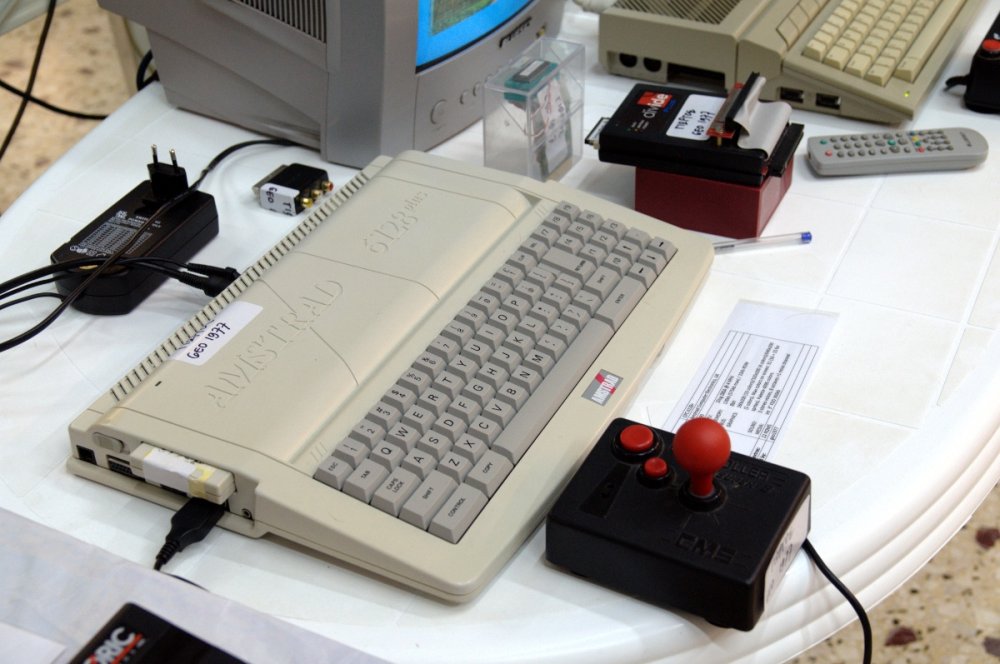
In 1990, the Plus range modernizes the CPC: ASIC integrating CRTC/gate array, hardware sprites (16), scrolling, 12-bit palette of 4096 colors with up to 31 colors displayable simultaneously (background + sprites), and audio DMA to relieve the Z80. The 464 Plus and 6128 Plus models maintain compatibility while adding a cartridge port. Technically convincing for gaming, they arrive late against 16-bit systems (Amiga, ST) and well-established Japanese 8/16-bit consoles.
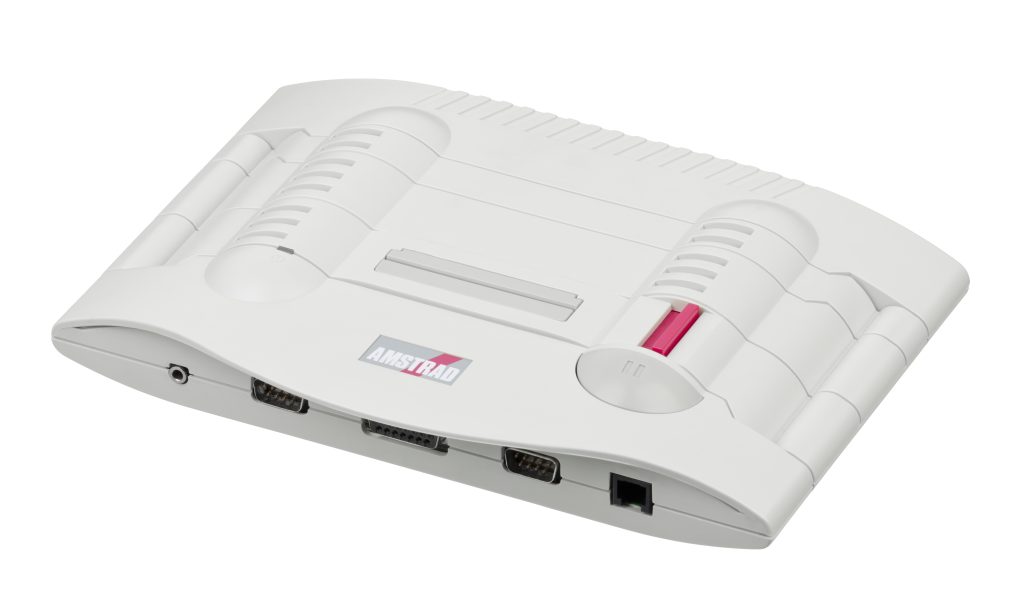
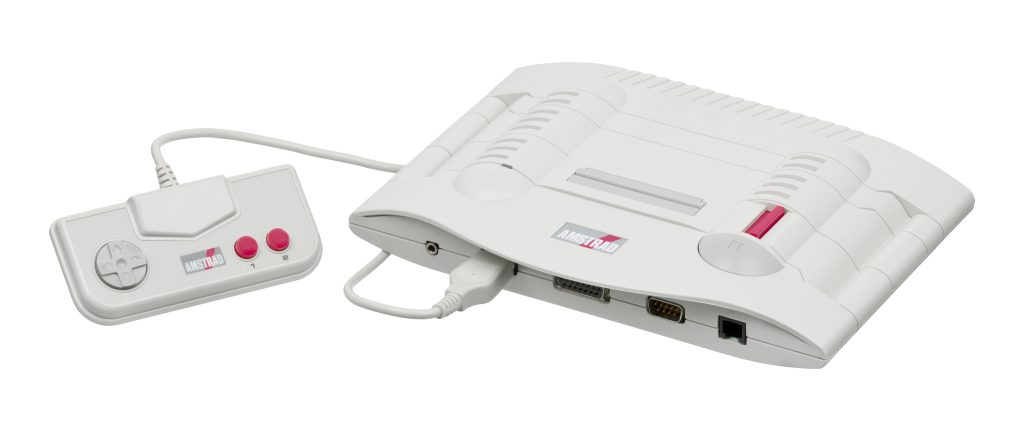
Amstrad adapted the ASIC into the GX4000 console (September 1990), sold with a game and two controllers. Despite massive European marketing, the software library is often limited to minor ports of CPC+ versions, and the machine struggles against already established NES/Master System and emerging Mega Drive/SNES. Sales estimates suggest a crushing failure with only tens of thousands of units sold, around 15,000 copies.
Ecosystem, games, press, and demo scene
From 1984, Amsoft stocked shelves with games and utility software, soon joined by Ocean, Gremlin, Ubi Soft, Loriciels, Infogrames, etc. The specialized press exploded: Amstrad Action, Amtix!, Amstrad Cent Pour Cent, Amstar… On the tools side, assemblers (Maxam, Devpac), Logo, Pascal, and C generated a dynamic creative scene. The demo scene pushed the machine beyond announced limits by exploiting rasters, splits, and sprite multiplexing, then targeting the ASIC of the Plus models for “16-bit-like” effects.
Today, the ecosystem remains active: optimized CPC “definitive” conversions, new demos, physical distributions on cartridge/3″, and modern hardware: M4 Board (Wi-Fi/SD), drive emulators (HxC, Gotek), 512 KB/1 MB memory cards, SCART adapters. Museums and associations preserve machines and software, while system ROMs are redistributed with Amstrad’s agreement for emulators.
Legacy, modern extensions, and product lessons
The CPC achieved what the brochures promised: a simple, reliable, and complete color microcomputer to plug in, learn, and play. Connecting the monitor to the power supply was a “stroke of genius”: zero RF adjustment, clean image, simplified after-sales service. In return, the user paid more “per ticket,” but perceived a clear value compared to competitors delivered “bare.” The choice of the 3″ format locked the hardware ecosystem but gave industrial control and a margin on consumables. The CP/M openness and the richness of BASIC expanded usage beyond gaming, ensuring longevity.
The final act (Plus/GX4000) recalls a classic lesson: improving an 8-bit platform is not enough when the market is already shifting to 16-bit and consoles better equipped with content. Despite this epilogue, the installed base, the scene, and modern hardware keep the CPC as a platform for experimentation and technical nostalgia.
To go further: consult museum sheets and detailed technical files (links at the end of the article). They document release dates, regional variants, the 27-color palette, the exact capacity of 3″ disks, and additions in the Plus range (sprites, DMA, 4096 colors).
FAQ
Why was the CPC sold with a monitor?
To guarantee a sharp image without RF adjustment, standardize power supply via the monitor, and deliver a ready-to-use experience. This choice also simplified distribution and after-sales service.
What are the display modes of the CPC?
Three modes: 160×200 with 16 colors (Mode 0), 320×200 with 4 colors (Mode 1), 640×200 with 2 colors (Mode 2). 27-color palette on “classic” CPCs, extended to 4096 on the Plus range.
What was CP/M used for on the CPC?
To run a “professional” software library: word processors, spreadsheets, utilities, and development tools. The 6128 supports CP/M Plus, richer, while the 664 and 464 + DDI-1 use CP/M 2.2.
Why 3-inch disks and not 3.5-inch?
Amstrad bet on a rigid format perceived as robust and differentiating. One side provides ~178-180 KiB usable in AMSDOS Data; the drawback was cost and isolation from the 3.5″ standard.
What do the CPC Plus and GX4000 bring?
Hardware sprites, scrolling, 4096-color palette, and audio DMA. The 464+/6128+ maintain compatibility and add cartridges. The GX4000 reuses this core in console format but fails commercially.
Sources
- Amstrad CPC — Overview, models, sales — wikipedia.org
- Amstrad CPC (FR) — Context and success in France — wikipedia.org
- CPCWiki: CPC page — History, variants, CPC 472 — cpcwiki.eu