Which Brawler to Start With on Brawl Stars: The Best Choices to Learn Quickly and Progress Without Mistakes
Choosing which brawler to start with on Brawl Stars seems simple… until you come across a tier list full of names, percentages, and meta debates. The real issue, however, is not to pick “the strongest,” but to find a character that helps you understand the game: aiming, positioning, surviving, using your super at the right moment, and contributing to the team without needing insane mechanical skill.
The best choice to start with is therefore rarely the most spectacular brawler. It’s more often the one that forgives mistakes, remains clear in combat, and works in several modes. That’s why Shelly, the starting brawler, still holds real value for learning the basics, while some brawlers that look very powerful on paper can frustrate a new player if they require too much precision or coordination.
In Brief
🎯 The best brawler for beginners is the one that makes the basics visible: range, positioning, super timing, and engagement management. Shelly checks many boxes because her kit is straightforward, readable, and available from the start.
🧠 A beginner tier list should not be read as an absolute truth. A highly ranked brawler can be less instructive than a simpler character, especially if their effectiveness depends on a mechanic that’s hard to execute.
⚽ Depending on the context, some choices shine more: Jacky and Doug are noted as effective in Brawl Ball by Google Play, while Moe and Draco stand out for the Showdown mode.
📈 To progress quickly, try several profiles over a few matches, then keep the one that helps you understand your mistakes. The feeling of control often matters more than an impressive win rate.
Why Does the Choice of Your First Brawler Really Matter?
The choice of your first brawler matters because it directly influences your learning. A simple character makes mistakes easier to identify: poor positioning, super used too early, duel taken at the wrong moment. Conversely, a too technical brawler can mask the basics and give the impression that the game is unfair.
In Brawl Stars, each match is short, intense, and often punished down to the second. When starting out, the brain already has to manage a lot: walls, bushes, enemy range, mode objectives, ammo, super, gadgets… No joke, it’s not trivial. An easy-to-play brawler then acts as a smart crutch: it limits mental load to let the player understand the game’s rhythm.
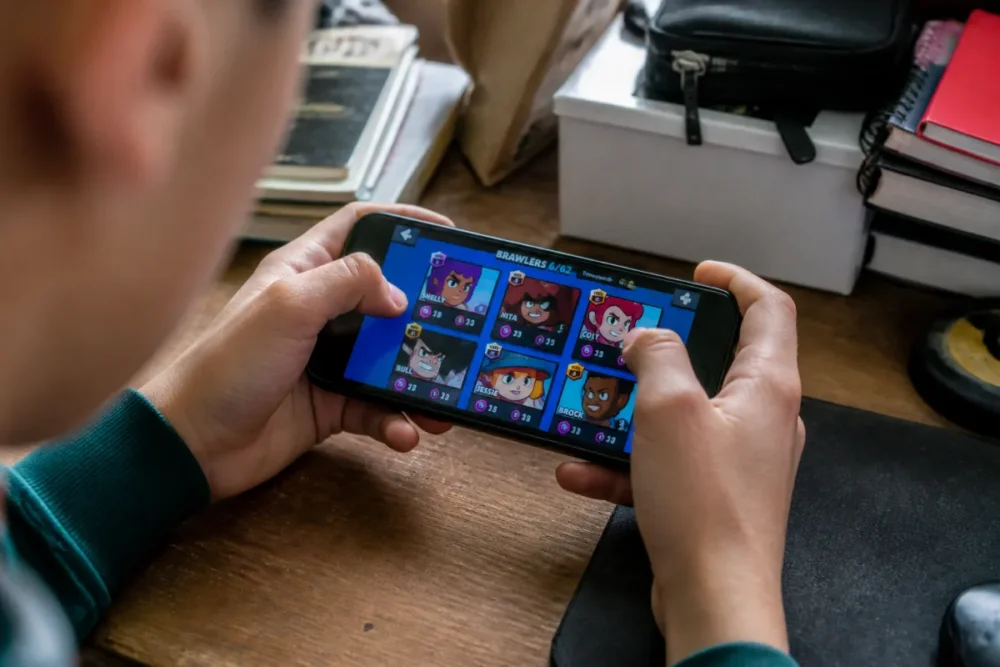
Shelly perfectly illustrates this logic. She is the starting brawler in Brawl Stars and her attack is immediately understandable: the closer the enemy, the more threatening she is. This simple principle teaches a fundamental game concept, distance. Too far, the impact decreases; too close, the duel becomes dangerous but potentially winnable. It’s basic, yes, but incredibly instructive.
According to the Brawl Stars tier list published by Dexerto, Shelly is placed in Tier A. For a beginner, this is interesting: she’s not just there because she’s free, she remains solid enough to support the early stages of progression. In other words, you can learn with her without feeling like you’re “wasting time.”
On the ground, in low and mid-trophy matches, it’s observed that players often progress faster with a brawler whose threat they immediately understand. A readable attack avoids confusing positioning errors with character weakness.
A good brawler to start with is not the one who wins alone, but the one who makes your mistakes visible quickly enough to correct them.
How to choose a brawler to start with without making a mistake?
To choose a beginner brawler, check three criteria: an easy-to-understand attack, a decent margin for error, and usefulness in several modes. If you have to read three guides to understand their kit, it’s probably not the best first choice.
The question “which brawler to start with” deserves a more nuanced answer than a simple ranking. The meta changes, balance updates shift, maps rotate. However, some criteria remain stable: readability, tolerance, versatility. These are what make a brawler a good companion for progression, even when the current ranking evolves.
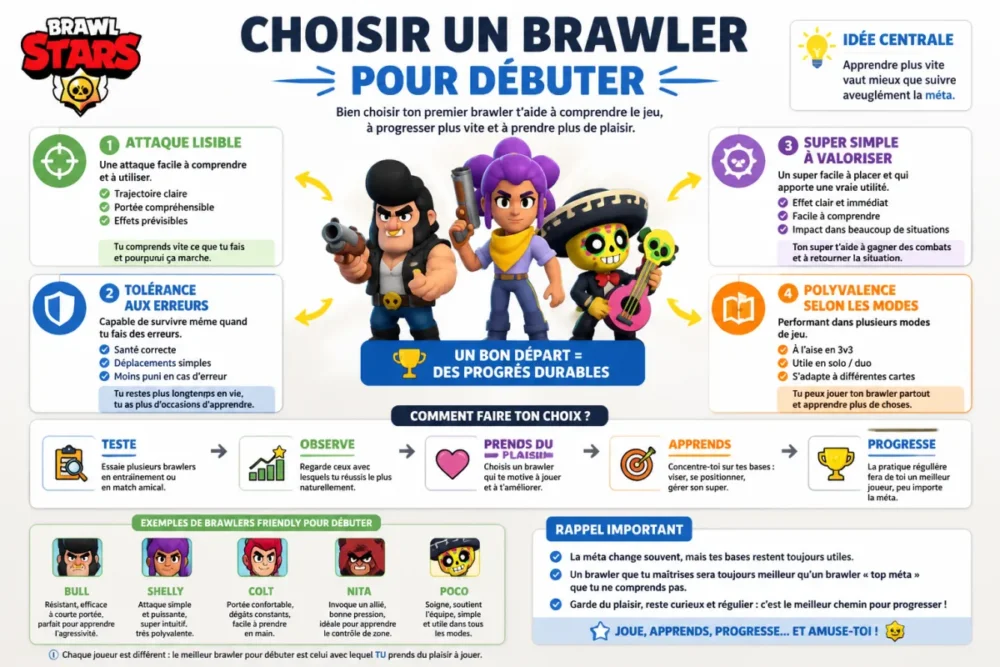
Here are the most useful criteria to look at before investing time in a character:
- Immediate handling: the attack must be readable within a few matches, without mandatory combos or too tight timing.
- Super easy to leverage: a super useful even if launched imperfectly helps more than an ultra-powerful ability that’s hard to place.
- Error tolerance: some survivability, decent range, or the possibility to retreat avoid instant deaths.
- Versatility: the brawler must remain playable in several modes, not just in a very specific map.
- Clear learning: after a defeat, you must understand what didn’t work: positioning, duel, objective, timing.
| Criterion | What it changes for a beginner | Positive sign in game |
|---|---|---|
| Readable attack | You quickly understand when to engage or retreat | You miss less from confusion than from panic |
| Good tolerance | You sometimes survive despite average positioning | You have time to learn before being eliminated |
| Simple super | You use it without waiting for the perfect situation | You regularly create a useful action |
| Versatility | You test several modes without relearning everything | You remain useful even outside your favorite mode |
This table is better than a copy-pasted list of “best beginner brawlers” because it gives you a framework. If a character is very strong but only checks one box, they might be profitable later, not necessarily now. Like a musical instrument, starting with the most impressive one doesn’t always help to learn the scales.
Which types of brawlers are best suited to start with?
The best profiles to start with are simple, versatile brawlers capable of having an impact without perfect execution. Accessible tanks, fighters with direct attacks, and some easy-to-understand support profiles allow learning positioning, objectives, and the rhythm of fights without drowning in mechanics.
There is an important difference between a brawler enjoyable to play and a truly educational brawler. An explosive character can give good sensations at first, especially if they chain eliminations at low level. But if their game plan relies on surprising poorly positioned opponents, they risk becoming frustrating as soon as players start better controlling distances.
Overall, a good beginner brawler should teach you at least one transferable skill. Shelly teaches short-range management. Jacky, highlighted by Google Play as very strong in Brawlball, teaches engagement and pressure around the ball. Doug, also featured in Brawlball, helps understand the value of survival, healing, and presence on the objective.
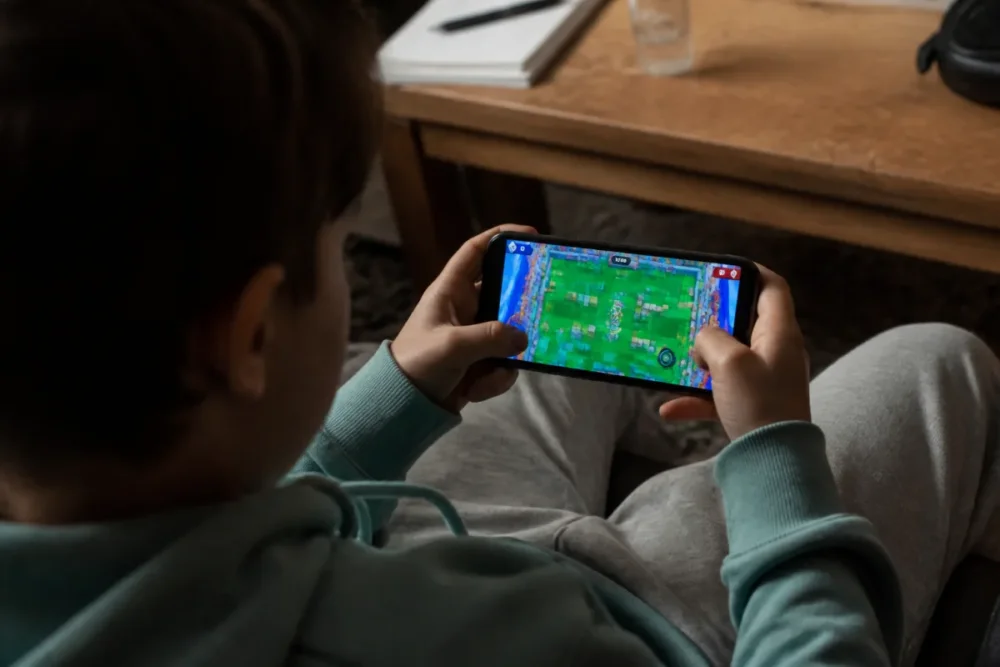
According to the Google Play editorial guide on the best brawlers by mode, Jacky is particularly suited for Brawlball thanks to her defensive Star Power and a gadget that increases her speed. Doug is also presented as effective there due to his high health, healing ability, and offensive as well as defensive versatility.
Conversely, some brawlers may seem tempting because they perform very well in a specific mode. Moe is recommended for the Survivor mode, with his Shovel Slingshot attack and his super that makes him climb into a drill. Draco is also mentioned for this mode thanks to his ability to absorb a lot of damage and his long-range lightning attack. These are useful references, but they do not replace the central question: does their style help you learn?
- To learn the basics: prioritize a straightforward kit, like Shelly, before chasing advanced mechanics.
- To play the objective: look at solid brawlers in Brawlball, like Jacky or Doug, if their style suits you.
- To survive longer: test profiles capable of taking hits or repositioning without relying on a perfect combo.
- To progress on multiple maps: avoid choices that only shine in ultra-specific situations.
Which brawler to choose according to your player profile?
If you like to charge in, choose a brawler capable of taking hits and engaging simply. If you prefer to think and control the map, pick a character with clear range. If you want to help the team, favor a kit useful even without a high personal score. The right choice depends first on your natural way of playing.
Most beginners make the mistake of looking for the “objectively best” brawler before identifying their own pace. Yet, Brawl Stars quickly punishes discomfort. If you hate close combat, a melee-oriented brawler will make you feel overwhelmed. If you like to create pressure, a character that is too passive risks frustrating you. In other words, gameplay comfort is not a detail: it is a learning accelerator.
Community data from Brawl Time Ninja are useful for understanding overall performance: in June 2026, Damian shows an adjusted win rate of 72.4%, ahead of Trunk at 71.2% and Ollie at 70.6%. But beware, icing on the cherry: a high rate does not tell the whole story. It can reflect a meta, favorable maps, a more experienced player profile, or particular usage.
Here is a more practical reading by profile:
| Your style | What to prioritize | Example usefully cited |
|---|---|---|
| Aggressive | Survival, simple engagement, direct pressure | Jacky in Brawlball |
| Objective / team | Presence, healing, defense, constant utility | Doug in Brawlball |
| Solo survivor | Autonomy, ability to take hits or reposition | Moe or Draco in Survivor |
| Pure learning | Readable attack, mistakes easy to understand | Shelly as a starting brawler |
Clancy also deserves a mention, but with nuance. Google Play presents him as very effective in Gem Grab, notably thanks to a progressive power-up and a super that deals 25% more damage. For a player who is already somewhat comfortable, this is interesting. For a brand new player, it is especially important to check if this power-up remains easy to exploit during a match.
A tier list answers “who often wins?”, but a beginner’s guide must answer “who helps me understand why I win or lose?”.
What classic mistakes should be avoided when starting out in Brawl Stars?
The biggest mistake is choosing only the highest-ranked brawler at the moment. The second is ignoring the game modes. The third, more insidious, is underestimating simplicity: an easy brawler may seem less exciting, but often teaches the right reflexes faster.
The meta is attractive, that’s normal. Seeing a brawler very high in a tier list makes you want to use them immediately. However, a powerful character may require high precision, a fine reading of matchups, or a sense of timing still absent in a beginner. Result: you get eliminated, blame matchmaking, then switch brawlers without understanding the real problem.
A common situation among new players is to switch brawlers after two defeats, while the mistake mainly comes from positioning or the chosen mode. In practice, sticking with a simple character for a few matches often allows you to isolate the problem much more clearly.
Another trap: playing a brawler without considering the mode. A character may be reassuring in Showdown, but less useful in Gem Grab if they don’t control the central area well. Likewise, a very strong brawler in Brawl Ball can lose much impact on an open map where range matters more. Good to know: comfort depends as much on the map as on the character.
- Don’t choose only the strongest: first ask yourself if they are easy to use.
- Don’t confuse fun and progression: a fun brawler can teach bad habits.
- Don’t switch too quickly: test several matches before judging a character.
- Don’t play all modes the same way: adapt your positioning to the objective.
- Don’t neglect Shelly: her status as a starter brawler doesn’t make her outdated for learning.
What quick method should be used to choose your first brawler?
The simplest method is to test three to five matches with a brawler, then rate your comfort rather than your score. If you understand your attack, survive long enough to learn, and remain useful in different modes, you have probably found a good choice to start with.
No need to manually go through all the game’s statistics to make a good decision. A very concrete approach works better: play, observe, compare. After a few matches, ask yourself simple questions. Do I die without understanding why? Does my super really help? Can I help the team even when I don’t get many eliminations?
To summarize, you can follow this mini-path:
- Step 1: start with Shelly to learn distance, bushes, and close duels.
- Step 2: test an objective-oriented profile if you like Brawl Ball, for example Jacky or Doug depending on your unlocks.
- Step 3: try a more autonomous profile in Showdown, like Moe or Draco, if you prefer playing solo.
- Step 4: compare your consistency, not just your best matches.
- Step 5: keep the brawler who teaches you something clear with each defeat.
This method has a huge advantage: it prevents you from blindly relying on a beginner tier list. Rankings remain useful to spot trends, but they don’t replace your feeling in a match. A brawler who gives you a clear reading of the game is often better than a “meta” choice that leaves you confused.
In short, if you’re still wondering which brawler to start with, go for simplicity, then expand. Shelly for the basics, Jacky or Doug if you like objectives, Moe or Draco if you want to explore Showdown, Clancy if you’re starting to better manage power-ups. The right choice will evolve with your level, and that’s perfectly fine.
Key Takeaways
- 🎮 Shelly remains an excellent starting point to learn the basics without mechanical overload.
- 🧩 A simple and versatile brawler trains better than a powerful but too technical character.
- ⚽ Jacky and Doug are solid benchmarks if you like playing the objective in Brawlball.
- 📊 Win rates help to read the meta, but not always the ease of use.
- 🚀 The best choice is the one that makes your mistakes understandable and your progress steady.
FAQ
Which brawler to start with if I mostly play solo?
If you mostly play solo, look for a self-sufficient brawler, capable of surviving without relying on a perfectly coordinated team. Moe and Draco are mentioned by Google Play as suitable for Survivor mode, but the most important thing is to choose a style you quickly understand.
Is it necessary to follow a Brawl Stars tier list when starting out?
No, a tier list is a reference, not a rule. It helps to spot the currently strong brawlers, but it does not always measure ease of use. To start, prioritize kit clarity and consistency in matches.
Is Shelly still useful after the first matches?
Yes, Shelly remains useful to consolidate the fundamentals: distance, timing, close pressure, and super usage. Her ranking in Tier A in a May 2026 tier list shows she can remain relevant beyond the simple tutorial.
Which brawler should be avoided at the very beginning?
Avoid especially brawlers whose gameplay you do not immediately understand. If the character requires high precision, a precise combo, or strong team coordination, it is better to save them for later.
How many matches does it take to know if a brawler suits me?
A few matches are enough to feel comfortable, but not always to judge performance. Test at least several maps or modes before deciding. If your mistakes become easier to understand, it is generally a good sign.