Have you ever plugged your phone into your computer only to find that it didn’t respond? Whether it’s to transfer photos or debug an application, a faulty connection can quickly become frustrating. This guide details the steps to follow to fix a USB connection in minutes, restore a Bluetooth pairing, or switch to a Wi-Fi transmission. You will find practical advice, a summary table, and links to additional resources to go further.
1. Diagnosing the USB Connection
Most file transfers still go through a USB cable. Before panicking and thinking your smartphone is permanently out of order, carry out these basic checks.
1.1 Check the Cable and Ports
- Cable Quality: A damaged or low-cost cable can cause intermittent disconnections. Test another one, ideally the one supplied with your phone.
- USB Port: Plug the cable into another port on your PC. The rear ports of a desktop computer often provide more stable power.
- Cleaning: Dust off your smartphone’s port and the PC ports with a toothpick or compressed air, without forcing.
1.2 Check the Phone Settings
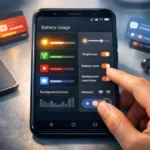
Once the cable is connected, unlock the screen and pull down the notification bar:
- USB Mode: Choose File Transfer (MTP) or Photo Transfer (PTP) according to your needs.
- On some Android models, enable USB debugging in developer options if you want access to more features.
Tip: If you don’t see the MTP mode, restart your phone and reconnect it immediately.
2. Troubleshooting Bluetooth Issues
Bluetooth is sometimes the simplest solution to send a few small files wirelessly. But pairs can disconnect or never connect:
2.1 Enable Bluetooth on PC and Phone
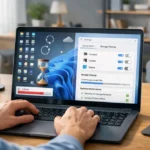
- On PC (Windows 10/11): Open Settings > Devices > Bluetooth & other devices, then turn on Bluetooth.
- On Android/iOS: In Bluetooth settings, check that your smartphone is discoverable.
2.2 Pairing and Drivers
Once both modules are enabled:
- Click on Add a Bluetooth device in Windows.
- Select your phone from the list and confirm the code displayed on both screens.
- If pairing fails, update or reinstall Bluetooth drivers via the Device Manager.
3. Connection via Wi-Fi
Transferring files over Wi-Fi can be fast, especially if you have a local network at home or in the office. Here is how to proceed.
3.1 Use Wireless Transfer Applications
- Popular Applications: ShareIt, AirDroid, or Feem offer a web interface or a PC client to sync folders and photos.
- Most generate a QR code to scan with your smartphone to establish a secure connection.
3.2 Check the Local Network
For the transfer to work, make sure your PC and phone are connected to the same Wi-Fi network. If you are using a VPN, disable it temporarily, as it can isolate your device from the rest of the LAN.
4. Updating Drivers and the System
An outdated driver or an operating system that has not received its latest updates can block the recognition of your phone. Consider:
- Updating Windows via Settings > Update & Security.
- Installing the USB or Bluetooth drivers provided by the manufacturer of your motherboard or laptop.
- Refreshing your phone’s firmware through the system settings, preferably while plugged in and on a stable Wi-Fi connection.
5. Third-Party Software Solutions
If despite everything your PC still does not recognize your phone, you can turn to specialized utilities:
- Mobile Device Manager: tools like MyPhoneExplorer for Android allow access to internal memory without using MTP.
- Samsung Kies or Smart Switch: for Samsung phones, these programs manage connection and backup.
6. Summary Table
| Connection Type | Key Actions |
|---|---|
| USB | Change the cable, enable MTP, restart |
| Bluetooth | Pair, check drivers, reinstall |
| Wi-Fi | Install an app, same local network, disable VPN |
| Drivers | Update Windows, motherboard, phone firmware |
| Third-party software | Use MyPhoneExplorer, Kies, Smart Switch |
7. Additional Tips
- Always restart both PC and phone if nothing works.
- Temporarily disable any antivirus or firewall that might block the connection.
- Consult a more detailed guide if you want to deepen each step.
8. FAQ
- Why doesn’t my phone appear in Windows Explorer?
- You need to choose the MTP connection mode on your phone, then authorize data access on your smartphone’s screen.
- Bluetooth transfer is too slow, what should I do?
- For large files, prefer Wi-Fi or a USB 3.0 cable, as Bluetooth remains limited to a few hundred kb/s.
- My PC sees the phone but does not charge it, why?
- It might be a port dedicated to low power consumption. Try a port marked “SS” or “High Speed”.
Conclusion
By following these different steps, you should quickly restore communication between your PC and your phone regardless of the connection mode. Changing the cable, checking settings, updating drivers, or opting for a wireless solution are all avenues to explore before panicking. With a bit of method, you will save time and avoid the frustration of blocked transfers.