| Key Points | Details to Remember |
|---|---|
| 🔒 Definition of Public Networks | open Wi-Fi networks accessible without a password or widely shared |
| 🛡️ Associated Risks | data interception by cybercriminals or malicious hotspots |
| 🌐 VPN | traffic encryption via a secure tunnel |
| 🔑 MFA | two-factor authentication to confirm your identity |
| 🔄 Updates | firmware and OS always up to date to patch vulnerabilities |
| 🚫 Sharing | disable sharing of files and printers |
Connecting at a café or airport, opening your laptop or smartphone, and diving straight into your emails or favorite apps is tempting. However, behind this convenience often lies a danger: public networks can be real sieves for our data. To avoid leaving passwords, card numbers, and sensitive information exposed to the first hacker who comes along, a few simple adjustments are enough. Here is a guide to surf without worry.
Why are public networks so vulnerable?
Imagine a lounge where everyone talks loudly and listens to your conversations. That’s a bit like the atmosphere of an unprotected public network: every data packet travels in the open. Attackers sometimes set up fraudulent access points, called “Evil Twin,” which mimic a legitimate hotspot to capture your traffic.
“Open Wi-Fi networks are particularly exposed to eavesdropping and identity theft.”
— NIST Special Publication 800-153
Without encryption, a simple packet capture tool is enough to collect your credentials, messages, or even your banking details. Add to that poorly configured public Wi-Fi and outdated equipment, and you get an ideal playground for cybercriminals.
Setting up a reliable VPN
The VPN is fundamental. In reality, it is your shield that routes all your data through an encrypted tunnel, safe from prying eyes. Choosing a reputable provider is crucial: transparent logging portals, modern encryption algorithms (AES-256), and a verified no-log policy.
Selecting the right service
- Check the privacy policy: an independent audit is a plus.
- Favor WireGuard or OpenVPN protocols for a balance of performance/encryption.
- Test the speed through a trial period or a satisfaction/money-back guarantee.
Installation and configuration
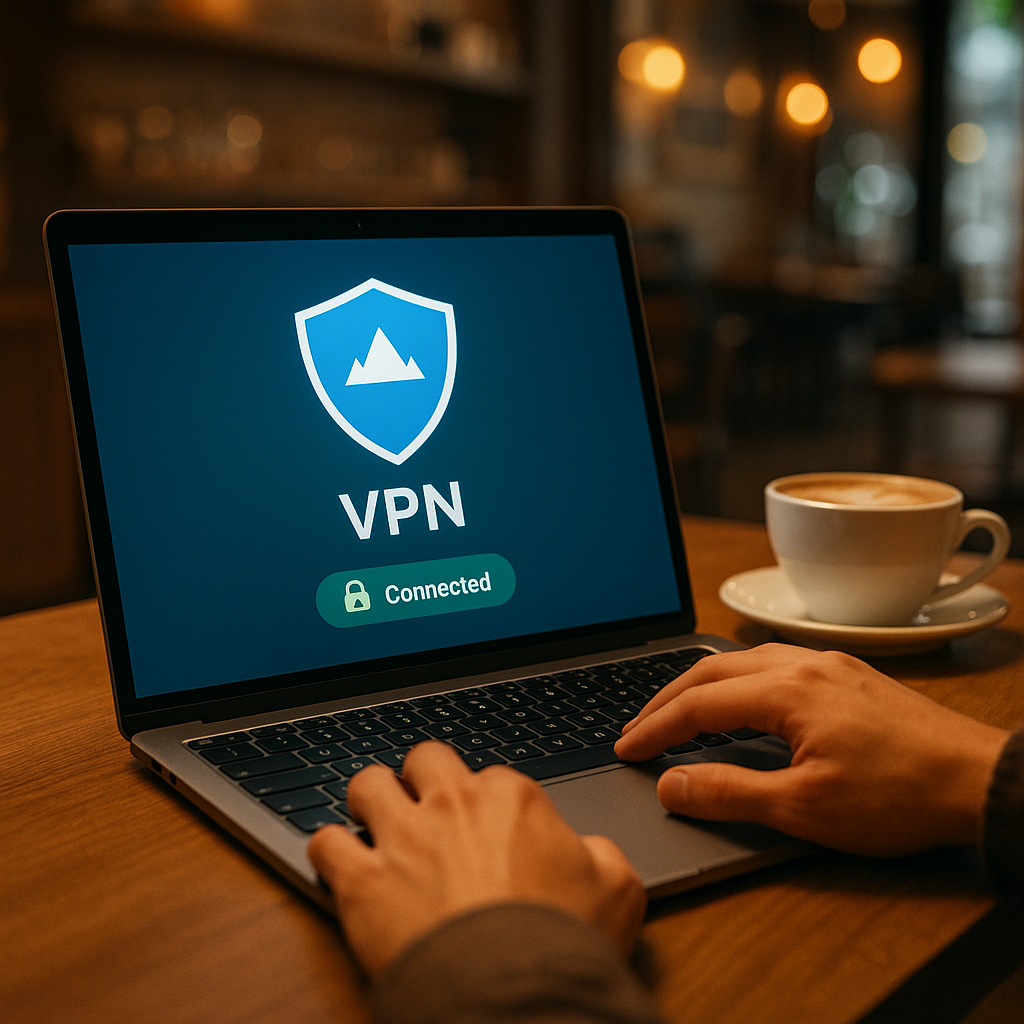
Once your subscription is purchased, the application configures itself in a few clicks. Activate the kill switch: if the VPN drops, the Internet connection immediately blocks, preventing any accidental data leaks. Finally, choose a nearby server to limit latency while benefiting from excellent privacy.
Ensuring Encrypted Browsing
The VPN protects all your traffic, but you can enhance security at the browser and application level.
Enforce the HTTPS Protocol
Many sites are now HTTPS by default, but some still remain on HTTP. The HTTPS Everywhere extension or the built-in feature in Chrome and Firefox ensures end-to-end encryption with the web server.
Protocol Comparison Table
| Protocol | Security | Performance |
|---|---|---|
| HTTP | 🔓 Not encrypted | ⚡ Very fast |
| HTTPS | 🔐 TLS 1.2/1.3 | ⚙️ Slightly slowed |
| SSH | 🔐 Encrypted tunnel | ⚙️ Medium |
Additionally, favor applications that encrypt data themselves, such as Signal for messaging or ProtonMail for emails.
Using Enhanced Authentication
If your accounts fall into the wrong hands, it is often because authentication was too weak. A simple username/password pair is no longer sufficient.
Enable MFA
- SMS: better than nothing, but vulnerable to SIM swapping.
- Authentication apps: Google Authenticator, Authy, or Microsoft Authenticator.
- Physical keys: YubiKey or SoloKey, the reference for maximum security.
Some services even offer biometric verification (fingerprint, facial recognition): an additional barrier for an attacker who only has your password.
Additional Tips for a Complete Shield
- Disable sharing of files and printers on Windows/Mac.
- Forget networks: remove public hotspots from your known connections list.
- Regularly update your OS and applications to patch vulnerabilities.
- Avoid sensitive transactions (banking, online shopping) on public Wi-Fi, or enable your 4G/5G plan in tethering mode.
« A virtual private network is not a magic wand, but it comes close to an airtight tunnel. »
FAQ – Your Frequently Asked Questions
1. Is a VPN essential on public Wi-Fi?
Yes, it is the first line of defense against data interception. Without a VPN, your exchanges (emails, messaging, browsing) travel in clear text and can be captured.
2. Can I trust free VPNs?
Generally, free services monetize your data or limit encryption. For occasional use, this may suffice, but a paid VPN remains safer.
3. How to detect a malicious access point?
Always verify the exact name of the hotspot and beware of networks without passwords. Avoid connecting to one that has never required keys before.
4. Is HTTPS enough to secure my connections?
HTTPS protects communication with the site but does not prevent the hacker from knowing your overall browsing. The VPN protects all your traffic.
5. Is the “kill switch” really useful?
Absolutely. If the VPN drops, it blocks all Internet connections to prevent data leaks in clear text.
{
“@context”: “https://schema.org”,
“@type”: “Article”,
“headline”: “Astuces pour sécuriser sa connexion sur les réseaux publics”,
“description”: “Des conseils concrets pour protéger vos données sur un Wi-Fi public : VPN, chiffrement HTTPS, authentification renforcée et bonnes pratiques.”,
“keywords”: [“réseaux publics”, “VPN”, “chiffrement”, “Wi-Fi public”, “sécurité”],
“mainEntity”: {
“@type”: “FAQPage”,
“mainEntity”: [
{
“@type”: “Question”,
“name”: “Un VPN est-il indispensable sur un Wi-Fi public ?”,
“acceptedAnswer”: {
“@type”: “Answer”,
“text”: “Oui, c’est le premier rempart contre l’interception des données. Sans VPN, vos échanges circulent en clair et peuvent être captés.”
}
},
{
“@type”: “Question”,
“name”: “Puis-je faire confiance aux VPN gratuits ?”,
“acceptedAnswer”: {
“@type”: “Answer”,
“text”: “En général, les services gratuits monétisent vos données ou limitent le chiffrement. Un VPN payant reste plus sûr.”
}
},
{
“@type”: “Question”,
“name”: “Comment détecter un point d’accès malveillant ?”,
“acceptedAnswer”: {
“@type”: “Answer”,
“text”: “Vérifiez le nom exact du hotspot et méfiez-vous des réseaux sans mot de passe. Évitez les hotspots qui n’ont jamais demandé de clés auparavant.”
}
},
{
“@type”: “Question”,
“name”: “Le HTTPS suffit-il pour sécuriser mes connexions ?”,
“acceptedAnswer”: {
“@type”: “Answer”,
“text”: “Le HTTPS protège la communication avec le site, mais n’empêche pas le pirate de connaître votre navigation globale. Le VPN protège l’ensemble de votre trafic.”
}
},
{
“@type”: “Question”,
“name”: “Est-ce que le « kill switch » est vraiment utile ?”,
“acceptedAnswer”: {
“@type”: “Answer”,
“text”: “Absolument. Si le VPN chute, il bloque toute connexion Internet pour éviter la fuite de données en clair.”
}
}
]
}
}